
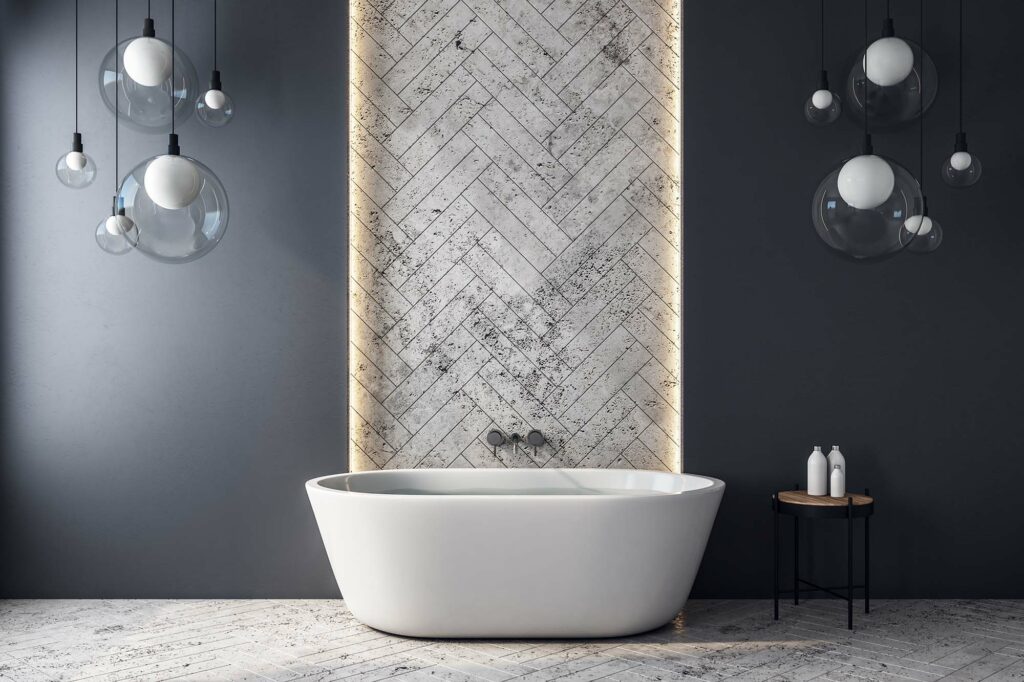
Bathroom tile has to do two very different jobs depending on where you install it. The tile beneath your feet needs to provide appropriate traction when wet, while a wall tile can focus more heavily on appearance, water resistance, cleaning, and the overall design of the room.
That distinction gives you more flexibility when planning a bathroom renovation. Instead of choosing one tile for every surface, you can select products according to the demands of each area.
Porcelain Is a Versatile Choice for Floors and Walls
Porcelain is one of the most versatile bathroom tile options because it combines low water absorption with a wide range of colors, patterns, textures, and sizes. Porcelain tile is classified as having water absorption of 0.5% or less, making it particularly well suited to moisture-prone applications.
For bathroom floors, look for porcelain products that are approved for floor use and provide appropriate wet slip-resistance characteristics. On walls, porcelain gives you more freedom to experiment with larger formats, polished finishes, dramatic patterns, and wood or stone-inspired designs. Large-format porcelain can create a clean, contemporary appearance with fewer grout lines, while smaller tiles can introduce more visual detail.
Ceramic Can Be a Great Wall-Tile Option
Ceramic tile offers another broad range of design possibilities, particularly on bathroom walls. Because walls do not have the same traction requirements as floors, you have more freedom to consider finishes and textures that would not be practical underfoot. Ceramic wall tile can work beautifully around vanities, shower walls, backsplashes, and other vertical surfaces when the specific product is approved for that application.
This is also where bathroom tile ideas can become more creative. You could use a restrained porcelain floor with a patterned ceramic accent wall, or pair a simple wall tile with a more distinctive floor pattern. Just remember that not every tile is approved for every application. Always check the manufacturer’s specifications before purchasing.
Slip Resistant Tile Matters Most on the Floor
The bathroom floor deserves special attention because water can change the traction characteristics of a surface.
Wet DCOF, or dynamic coefficient of friction, is one measurement used to evaluate tile for wet walking conditions. ANSI A137.1 establishes a wet DCOF threshold for tile intended for level interior spaces expected to be walked on when wet.
That does not mean a particular tile is completely slip-proof. Soap, standing water, cleaning products, footwear, drainage, maintenance, and installation conditions can all affect real-world traction.
For a bathroom floor, therefore, appearance should be considered alongside the tile’s technical specifications. Shower floors require even more careful planning. Smaller-format tile can provide additional grout joints and work well with the slope needed for drainage, but the waterproofing system beneath the tile remains essential.
Bathroom Walls Give You More Design Freedom
Walls allow you to focus more heavily on style. Glossy and polished tiles can create a reflective surface that makes a bathroom feel brighter, while textured tiles can add depth to an otherwise simple design. Large-format porcelain can produce a streamlined look, and classic ceramic formats can bring a more traditional character.
Mosaic tile can be useful for accents, niches, borders, or smaller sections where you want to introduce pattern without covering the entire room. Rather than matching every surface exactly, consider how different tile sizes and finishes can work together. A subtle floor paired with a decorative shower wall can create visual interest without overwhelming a smaller bathroom.
Proper Installation Protects the Bathroom
The tile itself is only part of a successful bathroom installation. Wet areas require an appropriate waterproofing assembly behind the finished tile. The substrate, membrane, drainage, grout, movement joints, and installation method all contribute to how the finished bathroom performs over time.
This is especially important in the Norcross and Metro Atlanta area, where humidity is part of the local climate. Good moisture management helps protect the surfaces and materials behind the tile. Professional tile installation can help ensure that the finished surface is not only attractive but also appropriate for the conditions of the room.
Match the Tile to Its Job
The best tile for a bathroom floor is not necessarily the best tile for a bathroom wall. Floors need appropriate traction, durability, and moisture performance, while walls give you greater flexibility with finishes, patterns, and formats.
Porcelain is a strong all-around option, while ceramic can offer excellent design flexibility for vertical surfaces. From there, the right choice depends on your bathroom layout, style, maintenance preferences, and installation requirements.
At Dalton Flooring of Georgia, you can explore tile flooring and bathroom tile options with guidance based on your project. Contact us today to discuss your plans in Norcross, GA, and find tile solutions for homes throughout Norcross, GA, and the greater Atlanta metropolitan area, including Duluth, Alpharetta, Roswell, and surrounding communities.